

How To Fix A Piano Key That Makes No Sound
Since their invention in the mid-1700s, pianos take held a prominent place in many homes. Both decorative and functional, pianos are i of the almost natural ways people go on music in their lives.
Withal, like any instrument, pianos — especially older pianos — crave maintenance for age-related problems. From gluey keys to muffled voicings, pianos can showroom a variety of evidence yous should contact a qualified technician to brand required repairs. For the novice, it can exist overwhelming to realize that several different factors can cause 1 symptom. Recognizing these issues, along with understanding essential piano components, is a vital office of instrument ownership.
With a solid agreement of mutual issues and symptoms, proper repairs and maintenance can prevent minor problems from becoming more pronounced. However, owners should also keep in heed that pianos are fragile instruments — making adjustments without the aid of a professional could exacerbate a trouble or even ruin the instrument.
8 Common Piano Bug to Wait Out For
Luckily, with an sensation of the most common symptoms, you'll be able to accurately describe any issues to a technician, giving them a neat idea of where to start and what might exist involved in a repair.
1. Stuck or Viscid Keys
One of the most obvious problems to place is viscid or stuck keys — it doesn't have an good to realize when the keys aren't returning to form. Nevertheless, only because it'southward easy to identify doesn't mean it's piece of cake to ready.
Sometimes, the central could require just a slight wiggle to make everything slide back to its original state. Still, it's imperative that you consult a professional person to examine the root of the problem. Even if it returns to form, a stuck key could be a symptom of a more pregnant problem.
Some possible culprits of sticky keys are:
- Physical Blockages: One of the reasons to continue food other crumbly substances away from your keyboard is that it only takes a small-scale obstruction for the keys to go jammed.
- Humidity Issues: Unsurprisingly for an musical instrument fabricated of woods, wet can wreak havoc on a pianoforte. It's important not only to ensure you keep beverages far abroad from your musical instrument, just besides that y'all maintain the climate to avoid temperature or humidity fluctuations. Once y'all've exposed the keyboard to wet, the keys or the front track tin can become bloated, causing alignment and spacing bug.
- Tight Key Bushings:Piano keys rely on two dissimilar pins — a remainder pin and a guiding pin— to ensure the cardinal rocks on its fulcrum and stays accordingly aligned. The pins residuum inside a felt-cushioned function of the pivot. If these felt bushings are too tight, either because they are new or because moisture has made them corking, the pins will non motion freely and the cardinal will stick or move slowly.
- A Warped Fundamental Slip : It's also possible that the key skid has get warped. This causes friction betwixt the key and the sideslip, preventing it from returning to its natural position.
2. Damaged or Dirty Keys
A well-maintained piano tin bring equally much artful beauty equally musical joy. Unfortunately, with time and improper maintenance, keys can go more than of an eyesore than a point of pride.
After years of playing, the oils from human easily tin trap clay that discolors the keys. Moreover, a lack of calorie-free can crusade some ivory keys to yellow. Some bones maintenance can slow discoloring — continue the keys covered when not in utilize, simply make sure that ivory keys get at least a piffling light to keep them at their whitest. After playing, use a soft, dry out rag to wipe away any clay or oils from your hands.
This procedure highlights the importance of discussing your general piano maintenance with your piano technician. While it may seem intuitive to use alcohol wipes or soapy water, these can quickly lead to problems. Improperly cleaning your keys can be just every bit bad every bit — or worse than — not cleaning them at all.
When owners hear "cleaning," i of the most common solutions is to achieve for soapy water. Unfortunately, wet can wreak havoc on your instrument. Too much humidity can swell or warp the keys, turning a minor corrective result into a problem with overall functionality.
Another popular idea is to employ household cleaners or rubbing alcohol to scrub away discoloration. This is maybe the worst option, as alcohol and many solvents will dry out the keys. In these cases, the ivory or plastic casing that covers the wooden key tin can become chipped or croaky.
If your keys are discolored and beyond a simple wipe downward, be sure to consult an expert for recommendations on the best manner to treat your piano.
3. Rattling or Buzzing Sounds
A well-maintained piano can bring as much aesthetic dazzler equally musical joy. Unfortunately, with time and improper maintenance, keys can become more of an eyesore than a point of pride.
After years of playing, the oils from human being hands can trap dirt that discolors the keys. Moreover, a lack of low-cal can cause some ivory keys to xanthous. Some basic maintenance tin can ho-hum discoloring — keep the keys covered when not in utilise, but make sure that ivory keys go at least a little light to keep them at their whitest. Afterwards playing, utilise a soft, dry out rag to wipe away whatever dirt or oils from your hands.
This process highlights the importance of discussing your full general piano maintenance with your piano technician. While it may seem intuitive to apply alcohol wipes or soapy water, these can apace pb to bug. Improperly cleaning your keys can be just as bad as — or worse than — non cleaning them at all.
When owners hear "cleaning," 1 of the most common solutions is to reach for soapy water. Unfortunately, moisture can wreak havoc on your instrument. Likewise much humidity can swell or warp the keys, turning a minor cosmetic issue into a problem with overall functionality.
Another popular idea is to utilize household cleaners or rubbing booze to scrub away discoloration. This is perhaps the worst choice, as alcohol and many solvents will dry out out the keys. In these cases, the ivory or plastic casing that covers the wooden key can become chipped or cracked.
If your keys are discolored and beyond a simple wipe down, be sure to consult an good for recommendations on the best way to care for your pianoforte.
four. Out of Tune
Equally with all instruments, intonation is vital to a pianoforte's performance. Different most instruments, though, piano tuning requires more than than a few twists of a tuning peg or a minor valve adjustment. The proficient news is that if y'all've maintained and serviced your piano regularly, information technology should not fall out of tune nearly equally often as a guitar or a trumpet.
While age and use inevitably lead to an eventual tuning, your efforts to keep consistent humidity and temperature tin can go a long way toward keeping your piano in tune longer. One of the most common reasons for premature detuning is the pin block swelling or shrinking due to environmental changes. Non only can this slightly shift the tuning pins, just it can also leave the pins loose in general, significant they'll fail to hold intonation fifty-fifty afterwards adjustments.
The dangers of loose pins causing ongoing tuning problems highlights again the importance of having a technician regularly audit and service your piano. Fail or trying to repair the piano yourself can atomic number 82 to costly and intricate future repairs.
To begin with, many players exercise not realize that touching the strings or tuning pins with your bare hands will speedily oxidize the metal. Once this has started, rust tin set in quickly, and the strength of the string is compromised. The chance of breaking a string or requiring new tuning pins at that point increases drastically.
The oils from your easily are only the start of these dangers. Without the proper tools or knowledge of the proper torque, yous run the adventure of damaging the pins themselves, which would could then require new pins or even repair to the pivot block.
5. A Notation or Group of Notes That Doesn't Sound Right
Another like shooting fish in a barrel-to-recognize but difficult-to-diagnose problem is when keys fail to sound a annotation. This is almost always a string or hammer event, merely diagnosing this trouble tin be difficult because other issues could too cause it, which is why a professional pianoforte technician is so vital. Moreover, the repairs involve working with the metal mechanisms inside, which can bring with it additional problems.
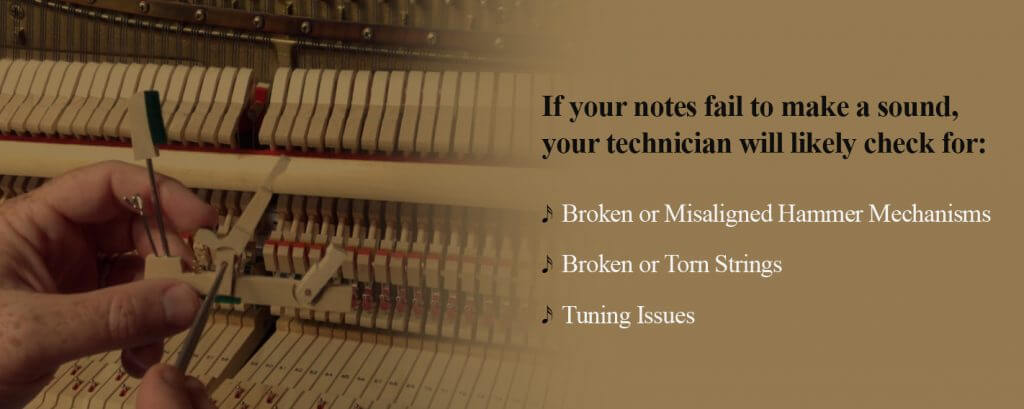
If your notes fail to make a audio, your technician volition probable cheque for:
- Broken or Misaligned Hammer Mechanisms:It seems obvious, simply if the mechanism that strikes the string is either broken or missing the string, there will exist no sound. The technician will replace or realign the hammer, depending on the condition of the machinery.
- Broken or Torn Strings: If the cord is on the verge of breaking or has already cleaved, the hammer may not brand solid contact and the cord may not vibrate correctly, which will effect in a lack of sound.
- Tuning Issues: 1 other possibility is that the string has fallen manner out of tune. In this case, the hammer makes contact, but the string does non have enough tension to make a audio. If this is the instance, especially with only one notation, it could mean the tuning pivot has come loose and will require repairs.
seven. Sustain Pedal Isn't Working
On the other end of the spectrum, sometimes y'all'll notice your notes don't retain resonance once you lot lift your fingers from the keys, fifty-fifty when you have the sustain pedal pressed firmly to the floor.
Thankfully, the issue is by and large like shooting fish in a barrel to discover since it near always entails the sustain pedal itself or the attached lever, meaning information technology may require an adjustment to the pedal activeness or a realignment of the lever that controls the dampers. In rare cases, the lever itself will cause the assembly to be misaligned. In whatsoever case, your technician should be able to give you a meliorate sense of what adjustment they need to make when they await at your sustain pedal.
8. Piano Sounds Muffled
Another unfortunate piano trouble is poor voicing by the instrument. It isn't that the notes don't play or that they're out of melody — they merely don't have the clarity and harmonic tones that give a pianoforte its unmistakable sound. If you lot are planning to accept your piano voiced, it will besides need a loftier-level tuning before the voicing adjustments.
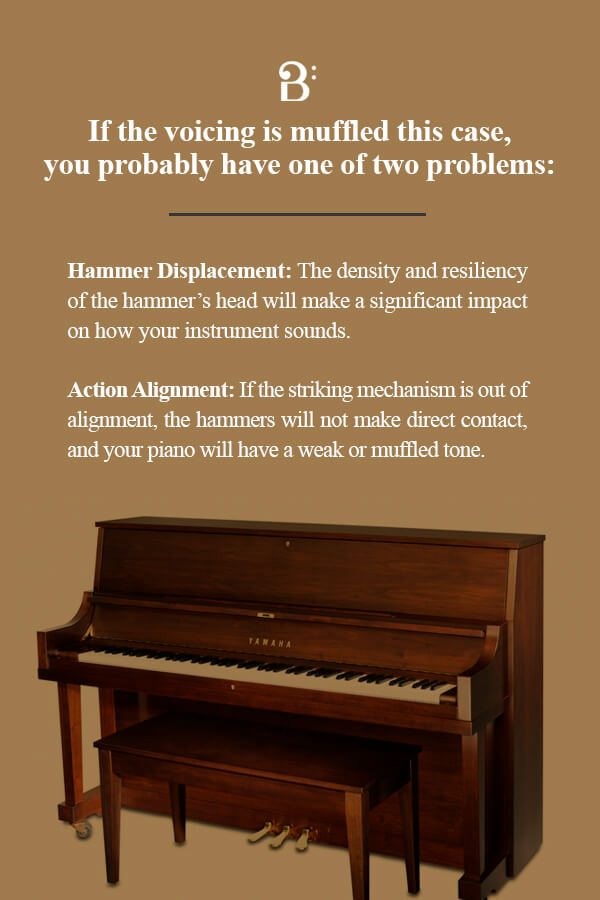
If the voicing is deadened this instance, you probably have 1 of two problems:
- Hammer Deportation: The density and resiliency of the hammer'due south caput will make a significant impact on how your musical instrument sounds. In the instance of a muffled audio, you will need more dense replacements to evangelize sharper sound. In other situations, the heads can be too dense and cause a harshness in the tone, in which example they can be softened rather than replaced.
- Activeness Alignment: The activity is the overall striking mechanism. If the hit mechanism is out of alignment, the hammers will not make direct contact, and your piano will have a weak or muffled tone.
Equally always, it's critical to have a skilled technician examine the piano and brand the proper adjustments. A trained ear can return the vibrancy and color to your old pianoforte, simply a novice can easily farther disrupt the activeness.
LET BRADFIELD PIANO BE YOUR Piano REPAIR AND MAINTENANCE TECHNICIANS
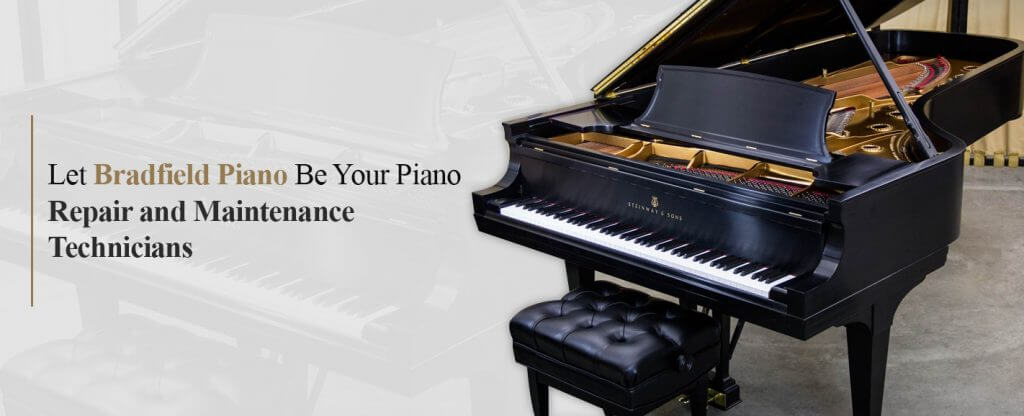
Information technology'south hard to believe that then many components come up together to make one unified sound. Due to their circuitous and temperamental nature, pianos require a good deal of noesis for both buying and proper care.
With acceptable maintenance and repair, your piano can bring a lifetime of joy and beauty. Avoiding situations that will lead to problems in the first identify is integral to safeguarding against future problems. While age and wear will ultimately affect your instrument, neglect, improper weather and avoidable accidents will cause your piano to require service earlier than expected.
The two pillars of piano repair are to address any issues earlier they become more meaning and to accept qualified technicians make any adjustments. It is easy to put off smaller, less noticeable bug, but mechanical or wear-related problems become worse over time — oftentimes causing larger bug down the road. Meanwhile, trying to correct the problems on your ain tin can damage the instrument as much as it can improve it.
Building a human relationship with our skilled technicians tin can exist a valuable decision in maintaining your investment in your piano. You will be able to notice the advice and skill you demand every bit soon as information technology becomes clear that your instrument needs servicing. Contact u.s.a. today to learn more nearly our services or schedule a maintenance visit.
Source: https://bradfieldpiano.com/common-piano-problems/
0 Response to "How To Fix A Piano Key That Makes No Sound"
Post a Comment